Why We Make Classics This Way
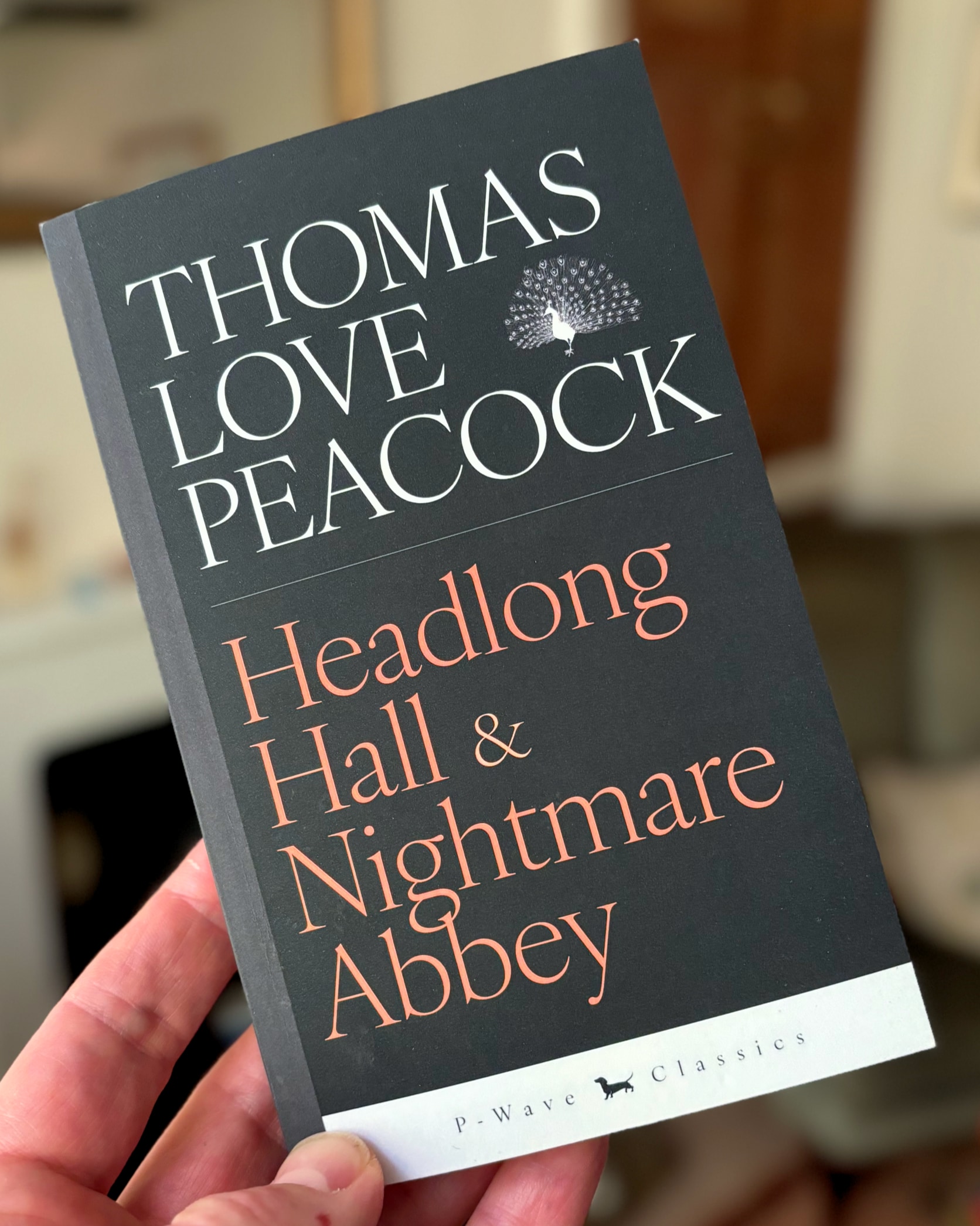
The first P-Wave Classic: Thomas Love Peacock’s Headlong Hall & Nightmare Abbey, produced as a compact, readable paperback edition.
Classic novels are often treated as monuments. They are placed on shelves, praised from a distance and wrapped in an air of obligation. Too often, they are also produced in editions that seem almost designed to discourage ordinary reading: thin paper, tiny type, cramped pages and long works compressed into heavy single-volume bricks.
At P-Wave Classics, we think classics deserve better than that. More importantly, readers deserve better.
We publish classics as books to be read today, not monuments to be endured.
That principle shapes every part of the series. Our editions are designed to sit between a standard consumer release and an academic edition, combining readability with depth. Each volume includes a new introduction and extensive notes, setting the work in its literary, cultural and historical contexts while remaining accessible to today’s general reader.
But the physical form of the book matters too.
P-Wave Classics are published in a compact A-format paperback: small enough to carry easily, large enough to read comfortably. The format sits naturally in the hand and slips into a bag without becoming a burden. It is a practical choice, not a nostalgic one. A classic should not have to be oversized to feel important, nor so bulky that reading it becomes an act of endurance.
We also print on standard paperback paper rather than the very thin, translucent paper often used for omnibus classics and large collected editions. Thin paper may make it possible to squeeze a very long book into fewer pages, but it can also make the act of reading more tiring than it needs to be. When the print from the reverse side of the page shows through, the reader is reminded at every turn that economy has been placed ahead of comfort.
Our aim is different: clear pages, readable type and books that feel like modern paperbacks rather than fragile relics.
That is also why we use a normal, comfortable font size. Many readers are put off classic editions not by the works themselves, but by the way those works are presented: dense pages, tiny print and an atmosphere of scholarly intimidation. We want to remove those barriers. The notes are there to open the book up, not to close it down.
Where appropriate, we also restore works to their original number of volumes. Many eighteenth- and nineteenth-century novels were written, published and read in parts. The pause between volumes was part of the experience: a moment to close the book, reflect, anticipate and then return.
That rhythm matters. Restoring the original volume structure is not antiquarian fussiness. It changes how the work is encountered. It also prevents long classics from becoming physically unwieldy, as anyone who has tried to read a large one-volume edition of a long novel in bed will understand.
Of course, these choices come at a cost. Larger formats, thinner paper, smaller type and single-volume editions can make books cheaper to produce and therefore cheaper to sell. We do not pretend otherwise. Accessibility matters, and price matters.
But accessibility is not only about making the cheapest possible printed object. It is also about making books that people can actually read with pleasure.
For that reason, we also publish P-Wave Classics as carefully produced ebooks for all major platforms, at a reasonable price. Digital editions can be adjusted by the reader, carried anywhere and made available in a way that printed books, by their nature, cannot always be. Print and digital serve different needs, but they share the same aim: to return important works to readers in a form that welcomes them in.
P-Wave Classics brings neglected masterpieces and overlooked voices of the eighteenth and nineteenth centuries back into print, alongside enduring literary classics. We are interested in works that shaped their age and continue to speak powerfully to ours: novels of satire, sensibility, gender, freedom, identity, social critique and human contradiction.
We do not publish classics because they are old. We publish them because they remain alive.
Our job is to make that life visible again: on the page, in the hand and in the mind of the reader.
We have now added a permanent page explaining why P-Wave Classics are made this way, from format and paper choice to type size and restored volume structures.
Readable. Portable. Thoughtfully edited. Made to be read.
That is the P-Wave Classics promise.
Explore P-Wave Classics↗︎