Tuesday Book Club: Omeros by Derek Walcott
History, Memory, and the Sea Between Us
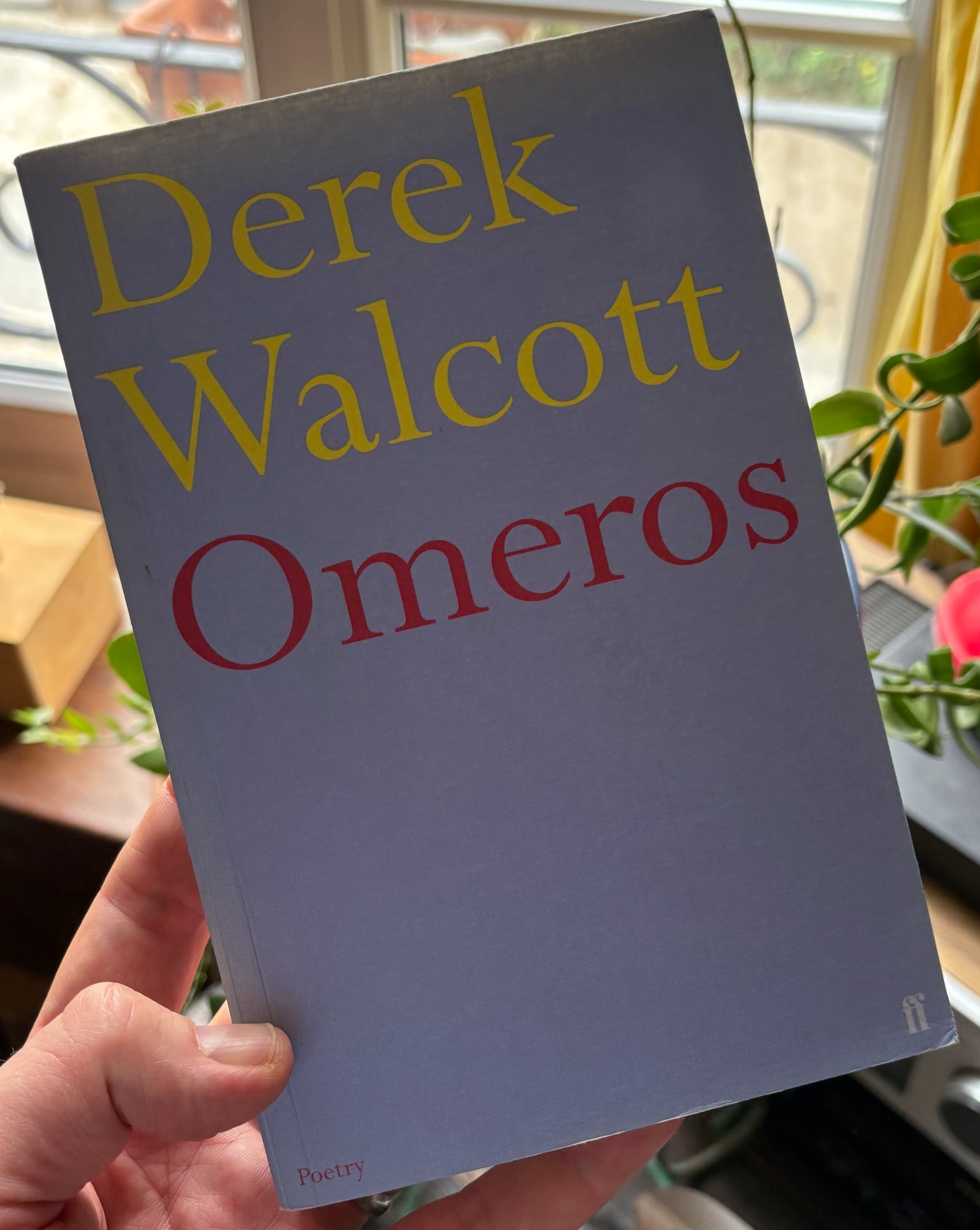
This week’s Tuesday Book Club choice is Omeros by Derek Walcott—and yes, it’s the first book of 2026. We’re starting the year with something a little ambitious, a little unexpected, and deeply rewarding. And before you worry: we’ve got a wonderful mix of books lined up for the months ahead. But this felt like the right place to begin.
I’ll admit it openly: I approached Omeros with a degree of scepticism. An epic poem? In the late 20th century? It felt like something to admire from a distance rather than surrender to. But page by page, line by line, Walcott dismantled that resistance. The poem drew me in slowly and then completely, until I realised I was seeing the world—and history—differently.
What Is Omeros?
At its heart, Omeros is rooted in St Lucia, Walcott’s home, and follows the lives of fishermen, lovers, wanderers, and ghosts. It borrows names and echoes from Homer, but this is no retelling. Instead, Walcott uses the epic form to explore colonial history, displacement, inheritance, and the scars that history leaves on individuals and communities.
The sea is everywhere in this poem—beautiful, cruel, connective. It carries memory, trauma, and possibility. And Walcott’s language, musical and precise, makes the weight of history feel intimate rather than abstract.
Why It Changed Me
What Omeros revealed, slowly and powerfully, is how history is never finished. It doesn’t sit neatly in books or monuments. It lives on in names, landscapes, silences, and inherited wounds. Walcott shows how the past presses itself into the present, shaping lives even when people don’t fully know the story they’re carrying.
That understanding—of history as something lived rather than learned—stayed with me long after I finished reading. It altered how I think about place, identity, and the unseen forces that shape us.
Why Read It Now?
Because Omeros rewards patience and openness. You don’t rush it. You let it wash over you. And in return, it offers something rare: a sense of connection across time, geography, and experience.
If poetry sometimes feels intimidating, this might surprise you. It did me. It’s challenging, yes—but also deeply human, generous, and ultimately moving.
Let’s Talk About It
Have you read Omeros? Did it change the way you think about history, or about poetry itself? And have you ever gone into a book expecting to admire it rather than love it—only to find yourself completely won over?
We’d love to hear your thoughts as we begin a new year of Tuesday Book Club on X (formerly Twitter) and Bluesky. There’s plenty more to come.