Tuesday Book Club: Down and Out in Paris and London by George Orwell
A Glimpse into the Margins, Then and Now
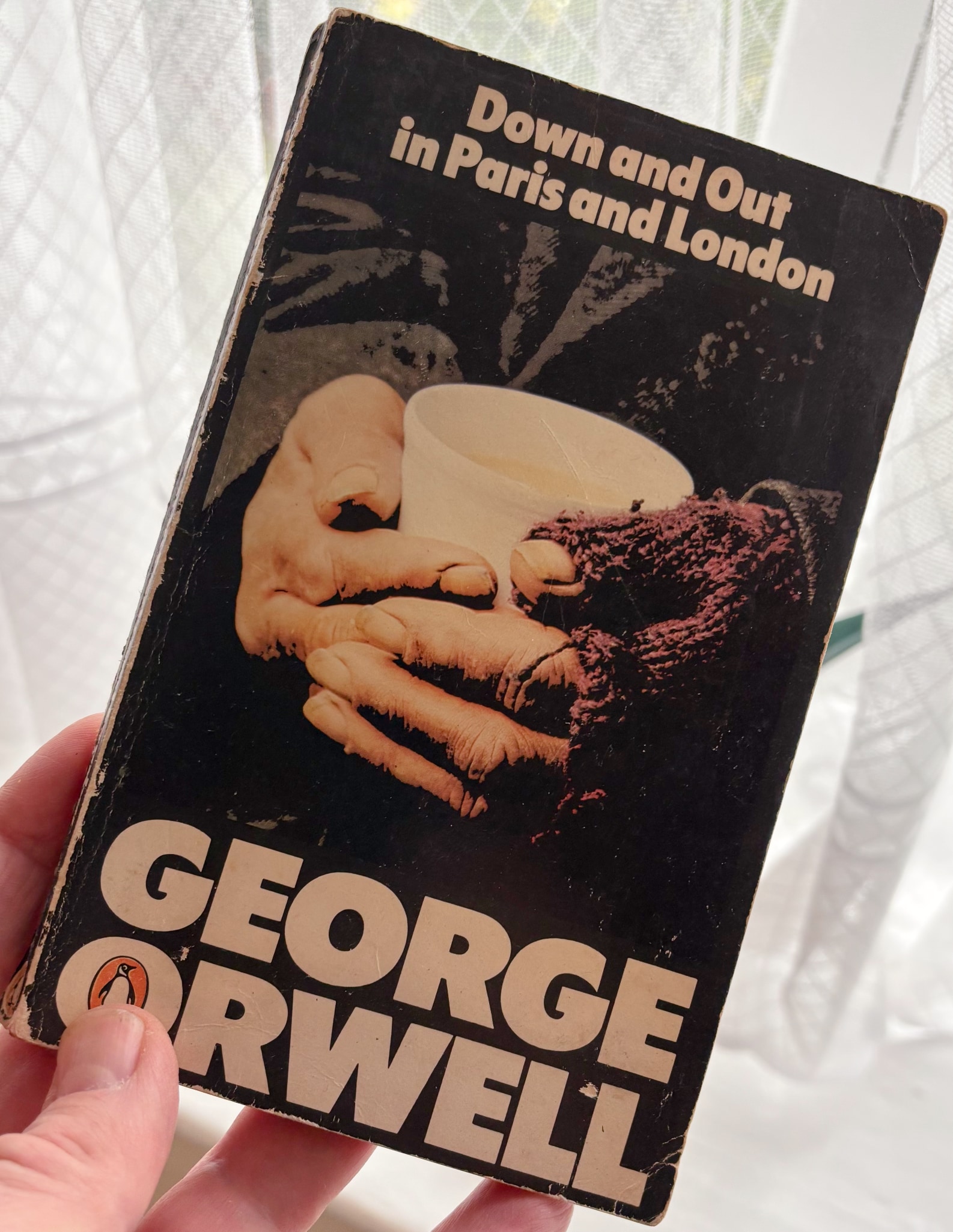
This week’s Tuesday Book Club choice is Down and Out in Paris and London by George Orwell—a book that hits harder than you expect, not just for what it reveals about poverty in the 1930s, but for how much of it still feels horribly familiar.
On the surface, it’s a journey through the underworlds of two great cities—Paris with its stifling restaurant kitchens and endless grind, and London with its shelters, tramps and rigid rules. Orwell’s writing is so clear, so precise, that even the bleakest scenes carry a strange beauty. But it’s the humanity in the book that lingers.
These aren’t faceless masses. They’re cooks, waiters, beggars, navvies, drifters—people living right at the edge of survival, but still capable of friendship, humour, dignity and moments of generosity. Orwell never writes down to them. He listens. He walks beside them.
What struck me most, rereading it now, is just how little has changed. We like to think we live in fairer, safer, more enlightened times, but look a little closer at either city today and you’ll still find people living in tents under bridges, working impossible hours for pitiful wages, and slipping through the cracks.
The structures that push people to the margins are still in place. The only difference is how much more skilled we’ve become at not seeing them. Orwell didn’t have time for that kind of polite blindness—and neither should we.
Let’s Talk About It
Have you read Down and Out in Paris and London? Did it surprise you? Shock you? Did it change the way you see the people behind the kitchens and on the street corners of your own city?
Join the conversation with #TuesdayBookClub and #GeorgeOrwell on X (formerly Twitter) and Bluesky as we step into one of the clearest, most humane portraits of life on the edge.