The Female Quixote Volume II Is Now Available
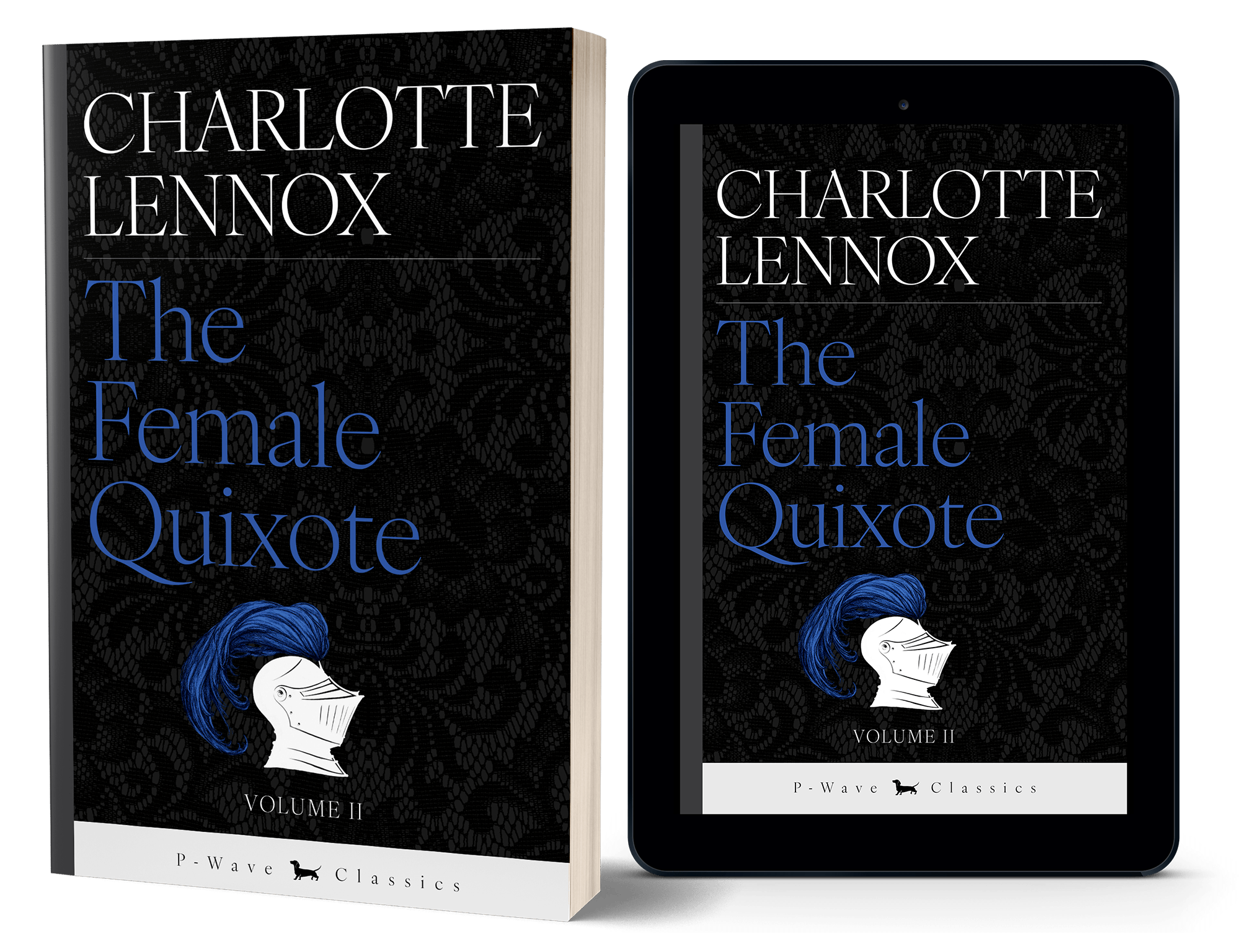
Today sees the publication of Volume II of Charlotte Lennox's The Female Quixote; or, The Adventures of Arabella, completing this P-Wave Classics edition of one of the eighteenth century's most original and surprising novels.
The two volumes are published as a set, following the original 1752 format. Volume I carries the introduction, the biographical essay on Charlotte Lennox, the essay on The World of French Romance and the Glossary of the Romance World. Volume II continues the text of the novel to its conclusion, with the same lightly modernised spelling and punctuation established from the first edition.
The first volume kept Arabella's errors largely within a domestic setting, where indulgence and isolation shielded her from serious consequences. Volume II takes Arabella decisively out of her father's castle and into the world, where the stakes rise. Placed among people who do not share her assumptions and have little patience for them, Arabella finds her movements, her speech and her expectations increasingly regulated by others. What was once charming eccentricity becomes, in the eyes of society, a problem to be managed.
Lennox does not soften the comedy as Arabella becomes increasingly exposed to scrutiny. There are scenes of tremendous wit as she encounters London society, rebukes suitors with the full apparatus of romance ethics and defends her conduct with precedents drawn from Mandana, Amalazontha and Statira. But the laughter sharpens. Figures such as Miss Glanville, Sir George Bellmour and the Countess represent different responses to Arabella's behaviour, ranging from opportunism and mockery to sympathy and patient instruction, and Lennox is attentive to the dangers faced by a young woman whose beliefs invite exploitation as readily as ridicule.
What holds the volume together is Lennox's refusal to simplify the conflict she has created. Arabella is articulate, morally serious and capable of sustained argument. Lennox trusts her heroine enough to let her be wrong in fascinating ways, and allows romance values to illuminate the deficiencies of modern manners even as she demonstrates their impracticality.
Earlier this year, alongside the publication of Volume I, we published a series of essays exploring some of the novel's major themes:
- The Female Quixote Is Not a Female Don Quixote – Why Lennox's novel is far more than a simple adaptation of Cervantes' famous premise.
- Arabella Lives Inside Fiction – How stories shape identity, perception and our understanding of reality.
- Arabella Refuses to Dress Properly – Clothing, spectacle, femininity and social discipline in eighteenth-century society.
- The Price of Becoming Sensible – Why Arabella's famous cure remains one of the most intriguing and ambiguous conclusions in eighteenth-century fiction.
More than two and a half centuries after its publication, The Female Quixote remains witty, surprising and intellectually provocative. It is a novel about books, imagination and the stories through which people understand themselves and the world around them. Above all, it is a reminder that becoming sensible may sometimes be more complicated than it first appears.
Volume II is available now in paperback and ebook editions from P-Wave Press and booksellers worldwide. Volume I is available separately.
Explore the book and order here:
The Female Quixote Volume II →