Celebrating the Life and Legacy of Dame Jilly Cooper
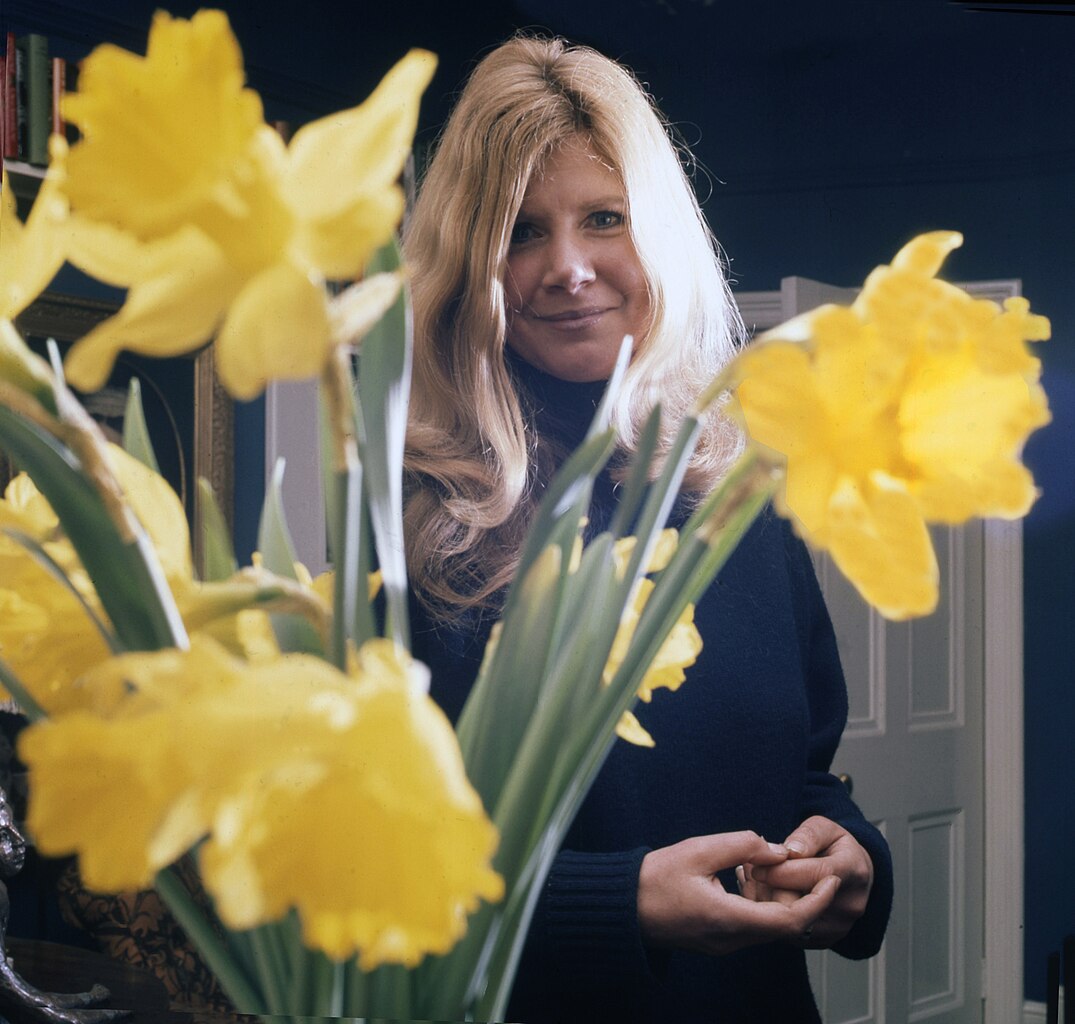
Jilly Cooper at home in London (1975). Allan warren, CC BY-SA 3.0, via Wikimedia Commons.
Today we pause to celebrate the life of Dame Jilly Cooper (1937–2025), a writer of rare energy, wit and audacity. Though the news of her passing prompts a fullness of retrospection, it can sometimes understate just how remarkable a trailblazer she was—especially considering how much more difficult it was for women in her generation to do things on their own terms.
To the wider public, Jilly Cooper will be known for her bestselling novels, the Rutshire Chronicles, with its scandals, rivalries, glamorous settings, and unforgettable characters. But behind those popular works was a lifetime of forging paths, sometimes against resistance, and of insisting that a woman writer might write what she wished—about class, love, inequality, desire, power.
Born Jill Sallitt in Hornchurch, Essex in 1937, she first worked in journalism. Her early non-fiction included How to Stay Married (1969), a candid, irreverent book that set the tone for much of her later work. In time, she turned to fiction, launching her career with romance novels, and eventually claiming her singular place with Riders (1985), which became a cultural phenomenon.
What stands out is how often Cooper defied expectation. She once lost a manuscript on a London bus and, rather than surrendering, re-created it. She survived dramatic personal trials—marriage strain, public scrutiny, and even a train crash in 1999, from which she emerged clutching a manuscript. She also published Animals in War, an adaptation of her deep compassion for animals (especially given her life as a rescuer and her love of dogs).
And yet, from the vantage of a long and successful career, one might forget how much courage it took for a woman in her time to write openly about love, sex, envy, class conflict and ambition. She confronted conventions about what women “should” write, what tone they should adopt, what stories could be theirs. She did not merely follow a formula, but repeatedly stretched it, carving space for female desire, agency and humour in settings often resistant to it.
Her popular novels—scoffed at by some critics as “bonkbusters” or light entertainment—were always more than that: they were social commentary dressed in champagne-glass drama. Through her crowded, boisterous narratives, she exposed class divides, gender double standards, emotional hypocrisy, and the cost of ambition. In doing things her own way, she indeed typified a spirit of her times—when women were increasingly refusing to stay silent, refusing to play the modest supporting role.
We at P-Wave Press offer our deepest condolences to her family, friends and readers. But beyond mourning, we also want to honour her as an example: of persistence, of voice, and of daring to write with all one’s edges showing. May her work continue to remind us that literature is a space of freedom, and that the boldness to assert one’s perspective still matters.