Why Robert Bage’s Hermsprong Matters Now
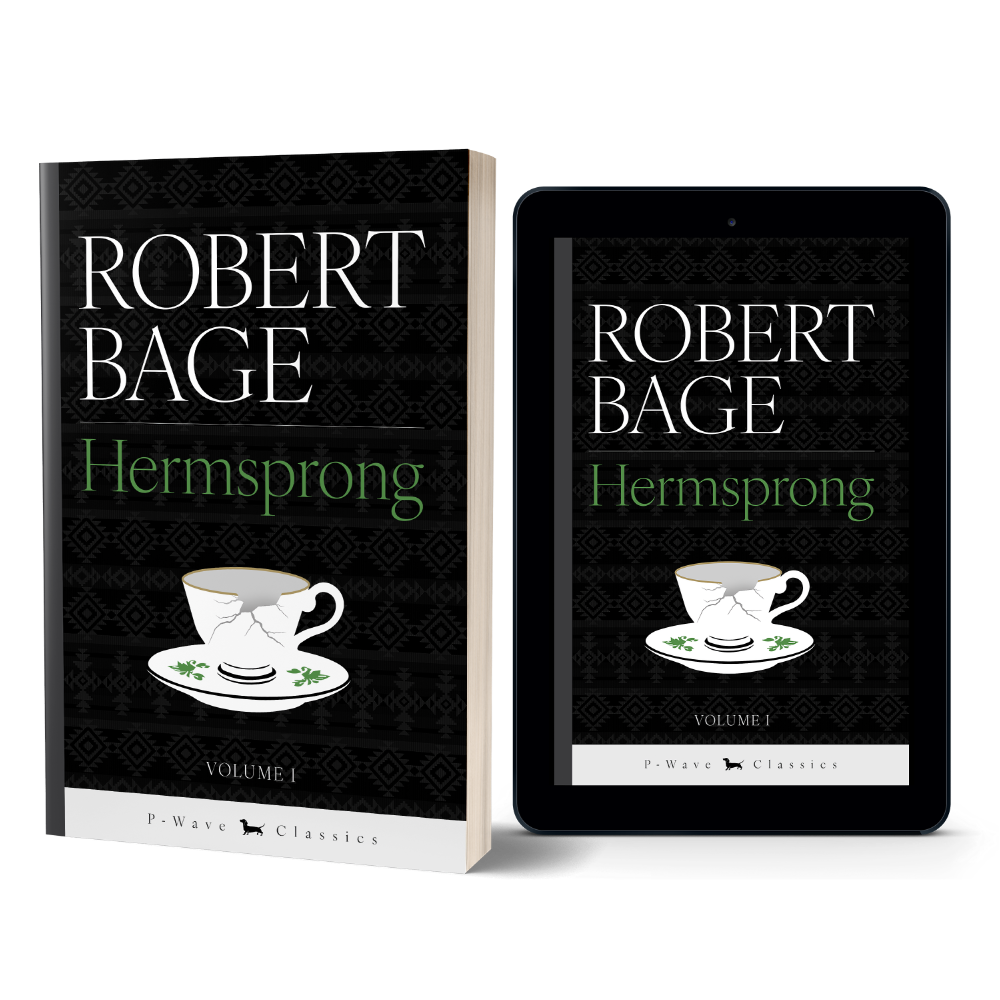
On 12 May, P-Wave Classics publishes Volume I of Robert Bage’s Hermsprong; or, Man as He Is Not (1796), restoring the novel to its original three-volume form.
Why return to a book that has been largely absent from the mainstream of literary history?
Because Hermsprong asks questions that have not gone away.
Written in the turbulent years following the American and French Revolutions, Bage’s novel examines what happens when inherited authority is confronted by moral clarity. Its hero, raised partly in America and untouched by the rigid hierarchies of Britain, views English society with a mixture of candour and disbelief. Rank, privilege and established religion are not attacked crudely; they are examined. The novel’s satire is not shrill. It is surgical.
At its centre stands Maria Fluart—witty, independent and strikingly modern. She refuses to accept that obedience is a feminine virtue. She challenges, argues and, when pressed, even brandishes a pistol. It is difficult to read her today without recognising how rare such a figure was in fiction of the 1790s.
Though admired by Sir Walter Scott, Bage never entered the canon in the way some of his contemporaries did. That neglect has less to do with quality than with the habits of literary history. Hermsprong sits awkwardly between categories: too radical for the comfortable tradition of the novel of manners, too comic for the solemn revolutionary novel, too humane to be merely polemical.
Yet it is precisely this balance that makes the book compelling. Bage defends equality without sentimentality, sincerity without sanctimony and reason without abstraction. He is sceptical of dogma, suspicious of cant and alert to the way power disguises itself as virtue.
Publishing Hermsprong in three separate volumes is not antiquarian affectation. It restores the pacing and structure Bage intended. The eighteenth-century novel unfolded across volumes not merely for commercial reasons but for rhythm—argument, complication and resolution allowed to breathe.
Volume I contains the Biographical Introduction, Editorial Note and full Introduction to the edition, together with the opening movement of the novel. Volumes II and III will follow later this year.
P-Wave Classics exists to recover works that deserve renewed attention—editions that aim for accessible authenticity rather than simplification or academic excess. Hermsprong is exactly such a work: bold, intelligent and disconcertingly relevant.
Two centuries later, its defence of equality, reciprocity and freedom of thought still unsettles complacency.
Volume I is published on 12 May.
📚 Explore the book and pre-order here →