Becoming Dad: Reflections for New Fathers — Announcement
On 2 February 2027, P-Wave Press publishes Becoming Dad: Reflections for new fathers by L.A. Davenport, in paperback and ebook.
The book began with a disagreement. At a first obstetrician appointment following a positive pregnancy test, Davenport and his partner were told that their certainty about the conception date was mistaken: it did not fit the calculations and therefore could not possibly be true. The implication was clear but left unspoken, and went unanswered. Davenport said nothing but as soon as they left the consulting rooms, he opened his phone and wrote the first fragment.
The book itself opens with a message he never sent. Composed on his phone during a night on which his infant son would not be consoled, and addressed to his wife while she was out, deservedly, with friends, it was not sent on the realisation that to do so would achieve nothing but guilt:
"I am literally sick of listening to him crying as hard as he possibly can…I feel powerless and stupid. I, who can fix almost any situation with a good ear and some heartfelt understanding, am ineffective and useless. What is the point of me for him if I can do nothing for him when he is in need?"
He kept writing anyway, for no reader. By the time his son slept, the passage had found its own conclusion: *because he is my son, and the well of love I have for him is infinitely deep.* That message opens the book. The notes that begun during his first son's infancy, and revisited when his partner became pregnant with their second, became the work we now announce.
The literature of parenting is overwhelmingly instructional. It assumes a reader who wants to be told what to do, and it answers questions that have answers: how to settle a baby, how to establish a routine, how to interpret a cry. These books have their uses. They are not, however, the whole of the territory.
What they leave untouched is the question that occupies this book—not how to care for a child, but who a father is supposed to be, and what he must become. The role of the father has been transformed within two generations. Fathers are no longer distant authorities, to be admired or feared from afar, and that change is to be welcomed. But the parameters of the modern father's role remain undefined, and there are no physical tasks that only a father can perform. What follows is ambiguity, second-guessing, and a vacancy where a settled identity used to be.
Becoming Dad addresses that vacancy directly. Among its propositions: that fatherhood is, at root, a matter of inference—that a man is, short of a DNA test, a father solely through an implicit agreement between two individuals, and that the bond with a child must therefore be constructed rather than received. That the bar is set so low for fathers that they are praised for doing parental tasks that are utterly normal, while mothers face a standard almost predestined to defeat them. That masculinity is not, in itself, toxic—only when it is imposed on others. That a man is not obliged to enjoy every minute of fatherhood, any more than a woman is obliged to enjoy every minute of motherhood.
These are not comfortable propositions. They are not offered as accusations, but as explanations of otherwise inexplicable fears, resentments and retreats.
The form is not a stylistic preference. Nobody's first year of fatherhood arrives in chapters. It arrives as isolated moments of intensity separated by exhaustion—a 3 am crisis, a sudden flare of joy at something inconsequential, a quarrel about nothing, a reconciliation, another sleepless night. Narrative imposes an order that the experience does not possess.
The book therefore proceeds fragment by fragment, designed to be read slowly, one reflection at a time, and returned to. Some fragments will resonate with a reader; some will discomfit. Where a statement unnerves, the book proposes the single question: *why?* It is not a manual and not a guide, but—in the author's phrase—a series of marker stones placed along a road on which we all get lost at some point.
The book comprises eighteen numbered sections, with an introduction, a note on reading, and notes.
L. A. Davenport is a novelist, short story writer and medical journalist, and the founder of P-Wave Press. Born in Cork, Ireland, and educated at Emmanuel College, Cambridge, he is the author of the novels The Nucleus of Reality and Escape, among other works of fiction and non-fiction. He lives in England and France and has two sons.
Becoming Dad: Reflections for new fathers will be available from all major retailers, and can be pre-ordered from announcement. It will also be available to buy direct from P-Wave Press.
Advance reader copies are available to journalists, reviewers and broadcasters from 3 November 2026. A strict review embargo applies: no reviews or coverage before 12 January 2027. Interview and excerpt enquiries are welcome; excerpts of up to 1,000 words may be cleared for serialisation.
Full press materials, including the press release and advance information sheet, are available on the media page.
Explore the book and preorder here:
Becoming Dad: Reflections for new fathers →
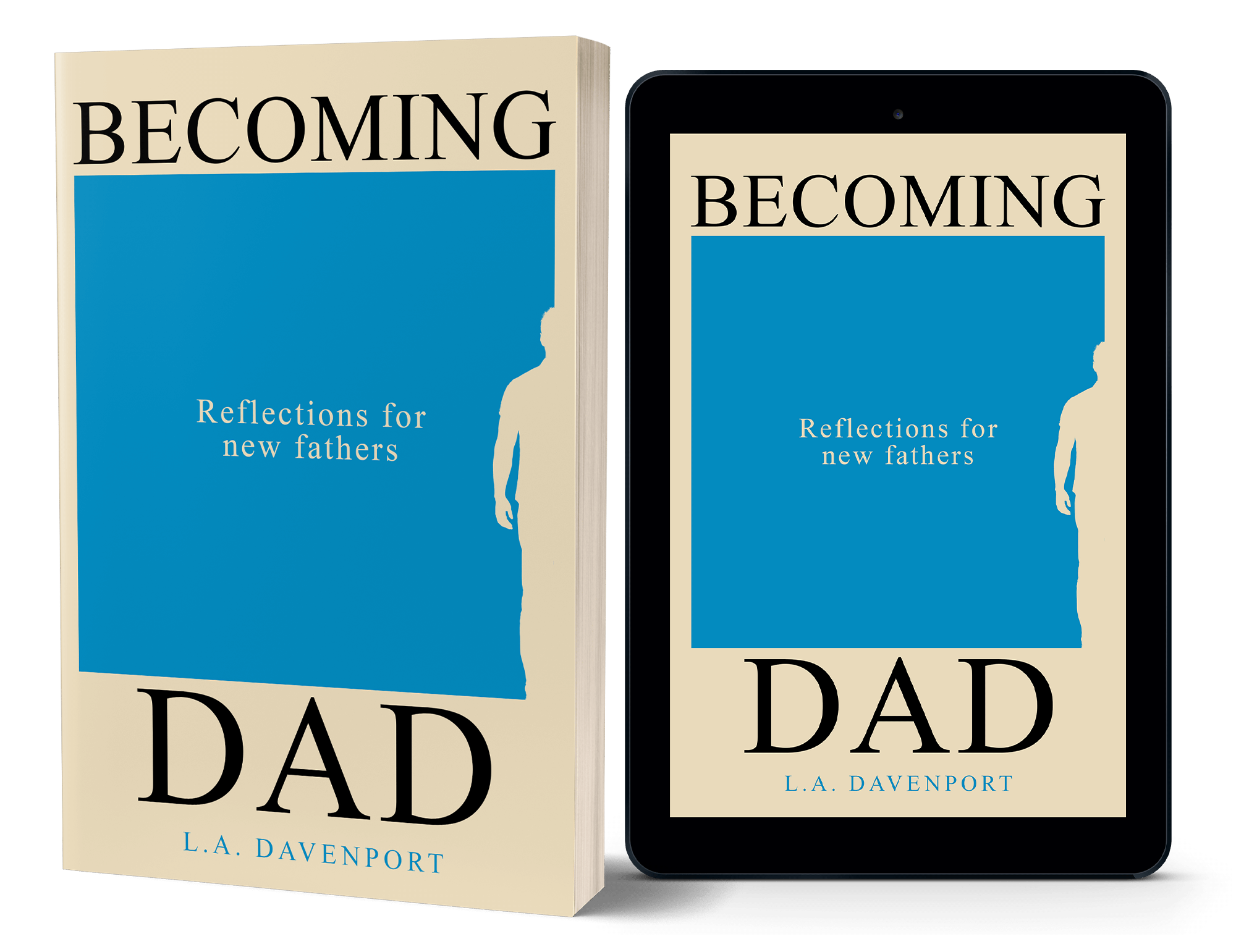
It is not a parenting manual. It contains no checklists, no milestones, and no promises to fix an infant. It is, instead, a sequence of eighteen numbered fragments—often a single line to a page—written for men standing at the threshold of fatherhood, and for anyone who wishes to understand what it costs to cross it.
The argument that started it all
The book began with a disagreement. At a first obstetrician appointment following a positive pregnancy test, Davenport and his partner were told that their certainty about the conception date was mistaken: it did not fit the calculations and therefore could not possibly be true. The implication was clear but left unspoken, and went unanswered. Davenport said nothing but as soon as they left the consulting rooms, he opened his phone and wrote the first fragment.
The book itself opens with a message he never sent. Composed on his phone during a night on which his infant son would not be consoled, and addressed to his wife while she was out, deservedly, with friends, it was not sent on the realisation that to do so would achieve nothing but guilt:
"I am literally sick of listening to him crying as hard as he possibly can…I feel powerless and stupid. I, who can fix almost any situation with a good ear and some heartfelt understanding, am ineffective and useless. What is the point of me for him if I can do nothing for him when he is in need?"
He kept writing anyway, for no reader. By the time his son slept, the passage had found its own conclusion: *because he is my son, and the well of love I have for him is infinitely deep.* That message opens the book. The notes that begun during his first son's infancy, and revisited when his partner became pregnant with their second, became the work we now announce.
Against the prescriptive
The literature of parenting is overwhelmingly instructional. It assumes a reader who wants to be told what to do, and it answers questions that have answers: how to settle a baby, how to establish a routine, how to interpret a cry. These books have their uses. They are not, however, the whole of the territory.
What they leave untouched is the question that occupies this book—not how to care for a child, but who a father is supposed to be, and what he must become. The role of the father has been transformed within two generations. Fathers are no longer distant authorities, to be admired or feared from afar, and that change is to be welcomed. But the parameters of the modern father's role remain undefined, and there are no physical tasks that only a father can perform. What follows is ambiguity, second-guessing, and a vacancy where a settled identity used to be.
Becoming Dad addresses that vacancy directly. Among its propositions: that fatherhood is, at root, a matter of inference—that a man is, short of a DNA test, a father solely through an implicit agreement between two individuals, and that the bond with a child must therefore be constructed rather than received. That the bar is set so low for fathers that they are praised for doing parental tasks that are utterly normal, while mothers face a standard almost predestined to defeat them. That masculinity is not, in itself, toxic—only when it is imposed on others. That a man is not obliged to enjoy every minute of fatherhood, any more than a woman is obliged to enjoy every minute of motherhood.
These are not comfortable propositions. They are not offered as accusations, but as explanations of otherwise inexplicable fears, resentments and retreats.
Why fragments
The form is not a stylistic preference. Nobody's first year of fatherhood arrives in chapters. It arrives as isolated moments of intensity separated by exhaustion—a 3 am crisis, a sudden flare of joy at something inconsequential, a quarrel about nothing, a reconciliation, another sleepless night. Narrative imposes an order that the experience does not possess.
The book therefore proceeds fragment by fragment, designed to be read slowly, one reflection at a time, and returned to. Some fragments will resonate with a reader; some will discomfit. Where a statement unnerves, the book proposes the single question: *why?* It is not a manual and not a guide, but—in the author's phrase—a series of marker stones placed along a road on which we all get lost at some point.
Publication details
Format Price ISBN Length Paperback £15.99 9781916937505 186 pages Ebook £7.99 9781916937512 Digital
The book comprises eighteen numbered sections, with an introduction, a note on reading, and notes.
About the author
L. A. Davenport is a novelist, short story writer and medical journalist, and the founder of P-Wave Press. Born in Cork, Ireland, and educated at Emmanuel College, Cambridge, he is the author of the novels The Nucleus of Reality and Escape, among other works of fiction and non-fiction. He lives in England and France and has two sons.
Availability
Becoming Dad: Reflections for new fathers will be available from all major retailers, and can be pre-ordered from announcement. It will also be available to buy direct from P-Wave Press.
For reviewers and the media
Advance reader copies are available to journalists, reviewers and broadcasters from 3 November 2026. A strict review embargo applies: no reviews or coverage before 12 January 2027. Interview and excerpt enquiries are welcome; excerpts of up to 1,000 words may be cleared for serialisation.
Full press materials, including the press release and advance information sheet, are available on the media page.
Explore the book and preorder here:
Becoming Dad: Reflections for new fathers →